How to add a key for US-spec Ford F-150 Raptor key with NXP Killer Programmer?
By miniobd
July 9th, 2026
168 views
Today we received a US-spec Ford F-150 Raptor key sent by our client, which operates at a 902 MHz frequency. This key requires online programming, yet the customer only has this single remaining key with no available matching channels, so he mailed it to us to make a duplicate replacement key. 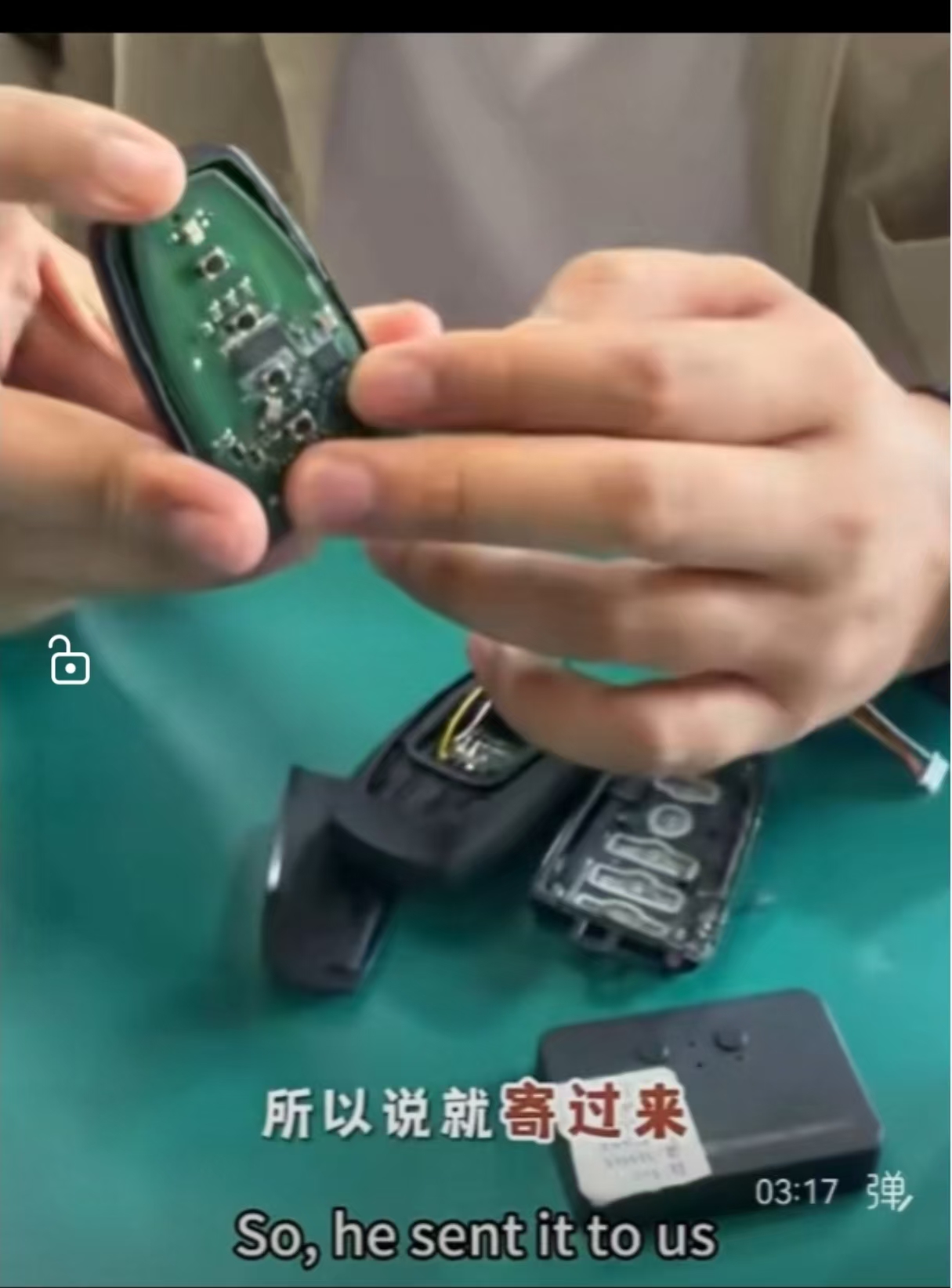 You can see obvious corrosion damage on this key, and two of its pins have already broken off completely. How do we duplicate a brand-new replacement key? The tools we prepared today are an NXP Device and a Type 49 Adapter. We can finish the entire key duplication process using only these two tools. Follow our footage to see the whole procedure.
 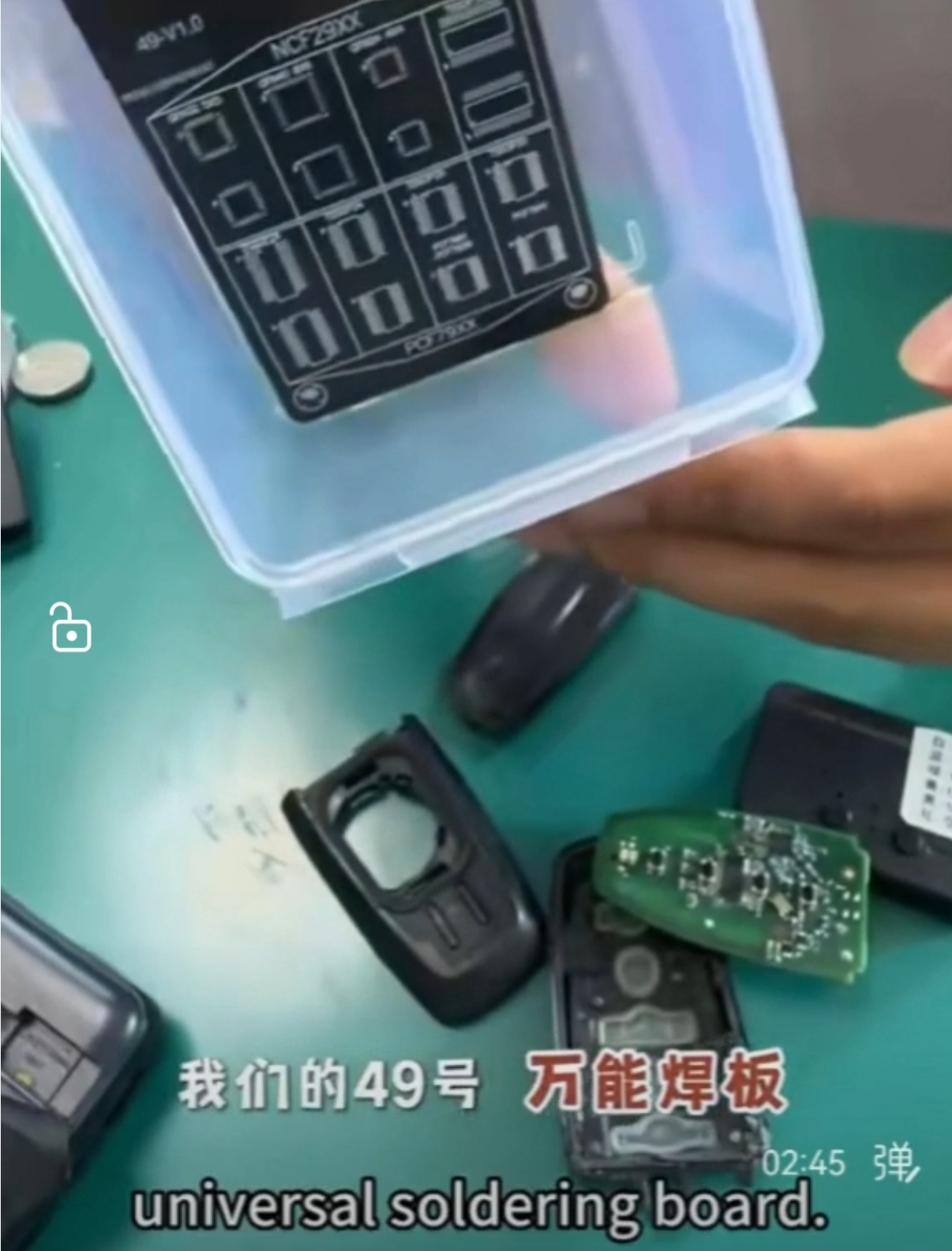 The customer’s key suffered severe water damage, so we need to extract the main microchip first, which is where our universal Type 49 Adapter comes into use. We start by desoldering the main chip and mounting it onto our universal soldering board to read its internal data. It is clear that the main chip has multiple broken pins. We solder the main chip to the universal board and carry out jumper wiring repairs.
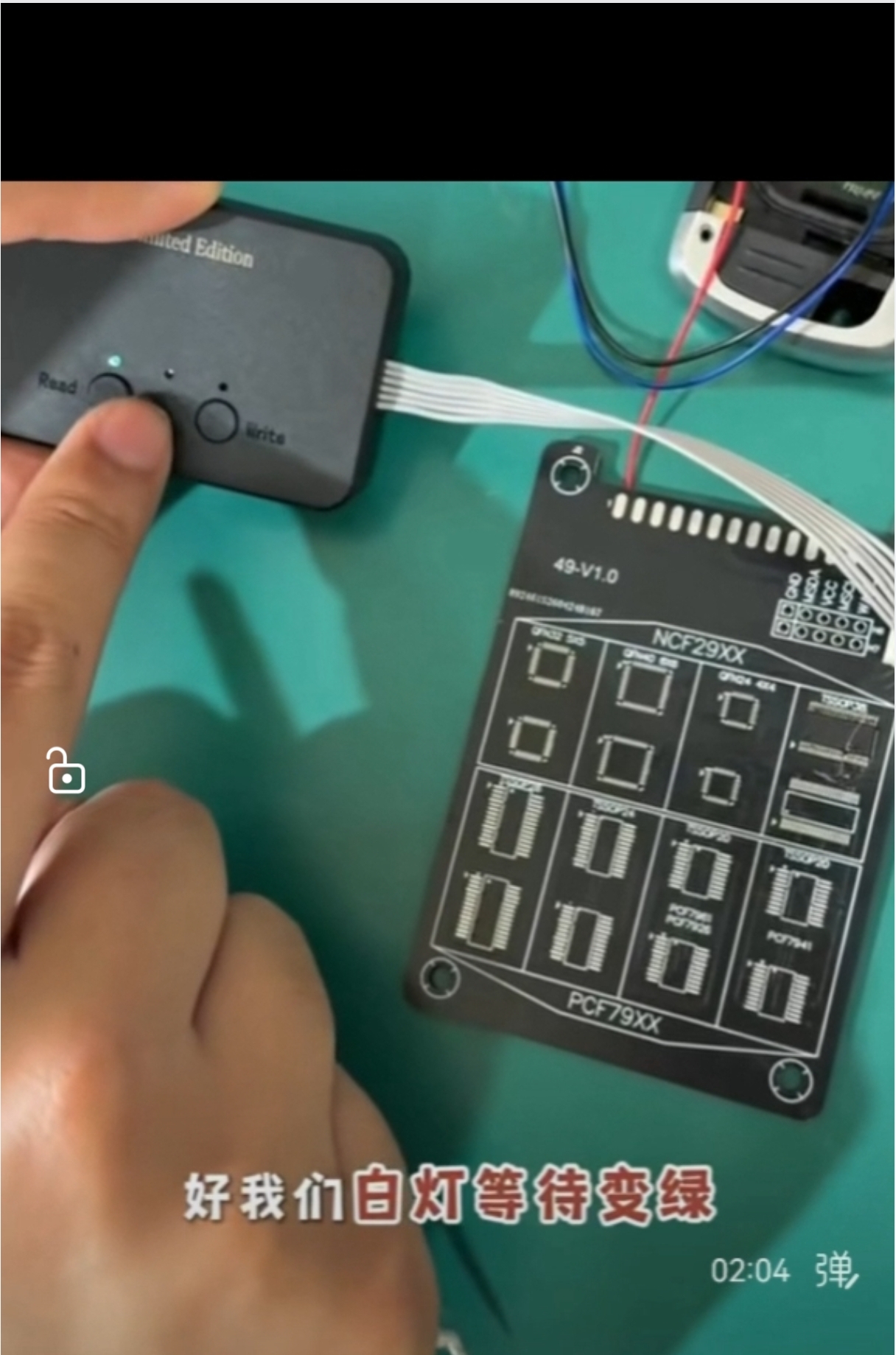
  We have successfully transplanted the original vehicle data chip onto the Type 49 Adapter. We tested the chip with a multimeter and found four broken pins in total; three of them are non-functional and do not affect operation, only the broken VCC pin needs to be reconnected with wiring. Now we click the Read button to check if the data can be extracted successfully. We wait until the white indicator light turns green, confirming that the data read operation has succeeded.
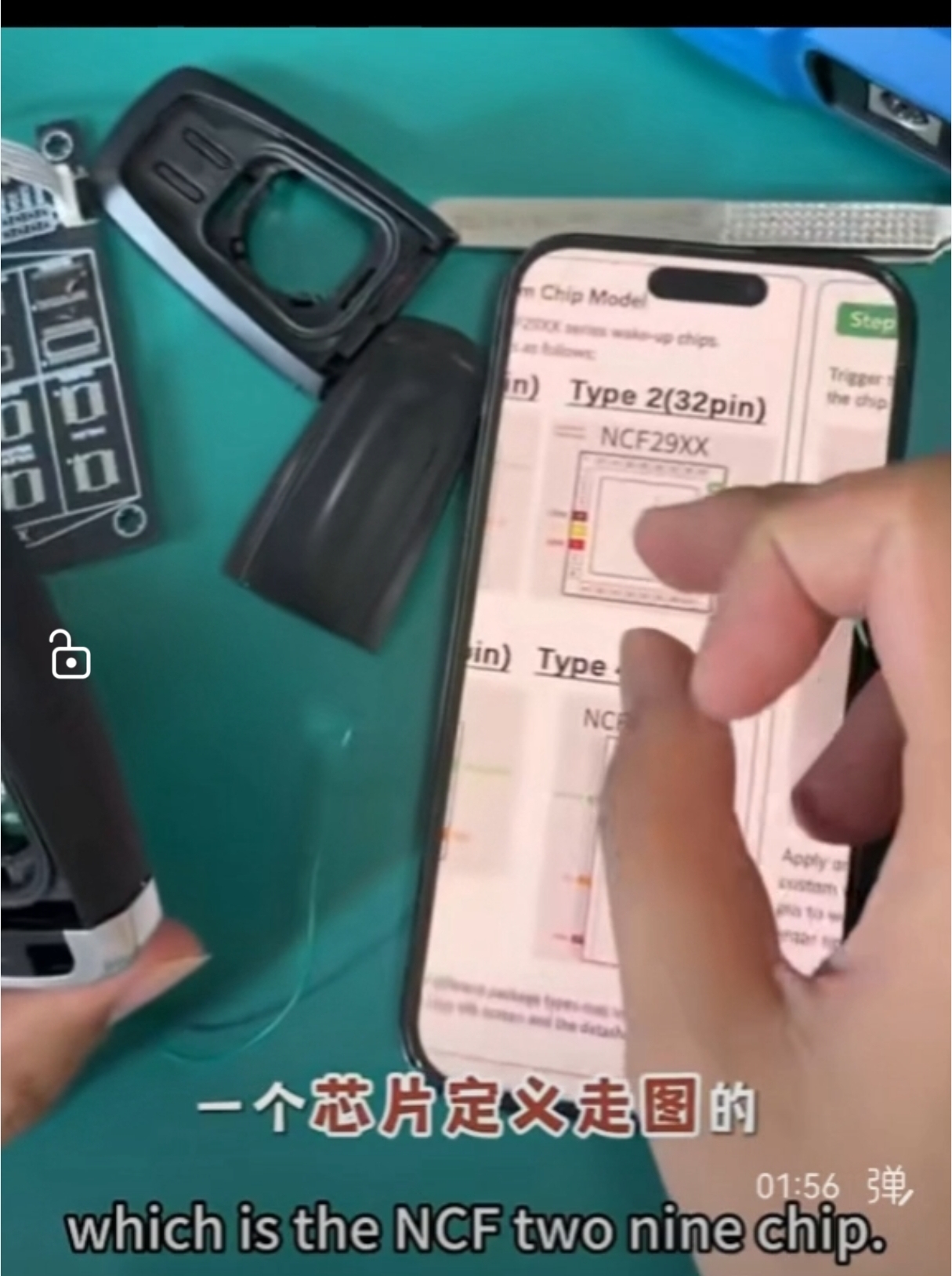
  We have a pinout diagram for the NCF29 chip model. Following this schematic, we soldered wires directly to the programming test points. Since the original key features an integrated one-piece housing that will be destroyed once disassembled, we avoided opening the casing entirely. Instead, we measured and mapped every pin definition and soldered leads directly to the circuit board. All wires are marked with defined functions: white wire for VCC, blue wire for MSDL, with corresponding labels provided. Now we connect our programming device. First we check the original key’s ID, which reads DE68 and shows an unlocked status. We click the Write button on the device, and wait for the blue indicator light to turn green, meaning the data writing process is complete. We record the previous ID DE68 (unlocked state). When we test again, the new ID is C9EF, and the key status has changed from unlocked to locked, verifying successful data writing. The customer will be able to use the key directly after receiving it. We then remove the temporary jumper wires, install a new battery, and close the rear housing to finish the physical assembly. The entire key duplication workflow is now complete. Finally we test all functions of the new key: we first verify the locked transponder ID, then confirm the remote frequency is correctly set to 902 MHz. This is a third-generation Ford F-150 Raptor, a model that still requires online programming for key registration. All tests pass perfectly, and the key is fully operational for immediate use by the customer upon delivery.
Previous
How Many NXP Killer Car Key Tool Adapters totally?
Read More
Next
How Airbag Repair Tools Work on Crash Data Modules at the Bench
Read More


